Newborough Green Roofs KT3 September 2023 by David Loffman

pigeon
in
a roof gutter, breaks the
line of tiles
Newborough Green Roofs KT3 September 2023 by David Loffman

Click here to hear Martine Wright MBE talking about rebuilding her life after she became seriously injured after the terrorist 7/7 attack in London in 7 July 2005.
Her slot begins a 24.30 and lasts just over 13 minutes.
Before the attack, Martine worked as a marketing manager. But she is now a 7/7 survivor, a Paralympian, Motivational Speaker, Author, Channel 4 Reporter and Mother.
She is also now a bi transfemoral above knee amputee.
St Mary's Hospital in 2005 while we both were learning how to walk again on Prosthetic legs.


At last! It's taken me sometime to work it out. But I think I'm there now.
Here's a video of my father of the bride speech. Given on Iona and Andrew's wedding day. The 10 June 2023 at Calke Abbey in Derbyshire.
Gordon Lightfoot has died aged 84.
He died in his Toronto home on 1 May 2023.
Click below for a news report
And click below for a link to one of the greatest songs of the 20th century
The Original
Well this is a tough c2c. I love both versions and feel
quite torn by them. I’ve heard them both for years. I think I’m gonna go with
MacColl.
Here are a couple of reasons.
Firstly, I’m so surprised by her voice in this song. It’s so
strong and accented. There’s a freshness in it.
Secondly, she’s more believable than The Kinks.
It’s a strange song really. Ray Davis is writing about loss.
Yet the song is so upbeat. His harmonies with his brother are fantastic but
there’s no connection to the implied sense of loss buried in the song. Perhaps
that sense of loss is carried better in a woman’s voice. She sings it upbeat
like the lads but as Nicki writes,
‘she gives it a slightly more melancholy feel to the song.
It feels more mellow and controlled.’ I agree with Nicki. I think it’s a
woman’s voice that we feel better expresses the tortured joy that is being
described here. In the words of Leonard Cohen, ‘a broken Hallelujah.’ Except of
course Cohen was a man and wrote and sang beautifully about loss.
My review of About Time by Calum MacColl

The CD opens with Good Enough. At the age of 58 Calum has
released his first solo album.
I love the honesty in this opening song. It kind of sets out his stall as a
song writer and performer. Calum uses the song to encourage himself to follow
and live his dream of being a successful artist. And he reaches out to others,
like himself, to be courageous and do whatever is needed to achieve your goals.
Calum puts the spectres of perfectionism and failure behind him. Perhaps even
slain the shadows of his parents’ – Peggy Seeger and Ewan MacColl - legendary
successes as singer song writers. He steps out of the shadows and performs remarkably well in my opinion.
I remember after years of teaching, feeling I wasn’t very good. Often paralysed
by fear myself. After years I suddenly realised I might not be the best teacher
on the planet but I was good enough. Calum like me seems to have reached a time
in his life and career where he too can accept that truth. That he too is good
enough. Better than good enough actually.
What follows is a series of songs about everyday life, like
walking his dog. Other songs include reflections on life, loss and bereavement.
For example, in Cosmonaut – the second song - Calum sings about his friend –
singer song writer Colin Vearncombe – Black – probably most famous for his
song, It’s a Wonderful Life - who died in a car accident. He writes about him as
a cosmonaut. Completely out of reach. Calum sings directly to his friend. Tells him how things have changed and asks him
what things are like for him. It’s a moving love song, without a whiff of Bowie’s
own space prisoner. Thank goodness.
And in the song The Other side / Liberation Road, written in two parts. About,
Woodrow Speed and Lyle Lovelady, two American soldiers who fought and died
during the D-Day landings in World War II.
The first part of the song is addressed to one of the American soldiers,
whose grave Calum and a friend Tim May - who co-wrote the song with Calum - found
among all the graves in the American Cemetery in Normandy. There was something of Eric Bogle's song No Man's Land here.
This first part of Calum's song is slow. The beat played out on keyboards punctuated with sparse instrumentation.
It consists of three repeated lines - haiku like - that take us from the battleground setting
in which the two men died and transports us with the familiar line, ‘see you on
the other side’, a line first associated with the Apollo 8 mission where the
astronauts were out of communication with Mission Control for 34 minutes while
they travelled behind the moon. Calum uses outer space again as a way of writing
about complete dislocation and separation from life. Instead he puts the phrase into a
military context. The line becomes abstract; either meaning, we’ll meet again
after the battle, or we’ll meet again in death. It’s a haunting and strangely
comforting refrain.
Finally, Calum covers one of the last songs his father wrote, Joy of living,
released three years before he died. It’s a beautiful performance and matches
the beauty of his father’s words. Calum is accompanied by an acoustic guitar
and suddenly we’re reminded of the huge folk music tradition that he comes from.
Ewan MacColl sang his goodbyes to the mountains of the Lake and Peak Distracts
he loved. Then sings his goodbyes to his wife
– Peggy and finally his children. . Calum’s father performed the song aged 71
and died 3 years later. Calum’s a sprightly 60 odd years old now. Let’s hope there’s
a lot more music to come.
Here's a link to Hive where you can buy the CD

Here's a review of Calum MacColl's - my friend's - CD. The review is published in Plastic Magazine. Here's a link to the magazine.

London-based indie folk artist Calum MacColl seemed destined to become a musician due to the rich sonic heritage of his family. The son of folk legends Ewan MacColl and Peggy Seeger, he’s also the half-brother of Kirsty MacColl but he’s ventured on his own unique musical path that’s seen him enjoy a decorated career that spans decades.
Over the years he’s played in various outfits and written for and performed with hundreds of iconic artists such as Rufus Wainwright, Eddi Reader, Backstreet Boys, Ronan Keating and Colin Vearncombe aka Black. Earning a Grammy-nomination for his work as a producer, he also co-wrote the BBC Radio 2 Folk Awards Best Original Song in 2015.
More recently however, he’s set out as a solo artist under his own name, to bring to fruition his dazzling creative vision. Now ready to share that vision with the world, he brings us his debut full-length record as a solo artist with the aptly titled album About Time.
Featuring ten new recordings that showcase Calum MacColl’s timeless folk songwriting talent and his assured musicianship and vocal performance, across About Time he delivers moments that charm, moments that move you and moments that inspire reflection.
Led by his smooth vocal leads carrying delicately crafted melodic lines and thoughtful lyricism, he enlists an array of traditional folk style instrumentation to capture a sound that’s as engaging as it is enduring to make a thoroughly enjoyable listening experience and a worthy debut effort from a celebrated artist.
Commenting on his debut LP, he shares, “It’s About Time – both the songs and the fact that I’ve only just got around to making this, my first solo album, at the age of 58. I’ve been writing songs all my life, but they’ve invariably been for other people to sing. It never occurred to me that I could sing them myself.”


Click here for a link to last week's Radio 4 programme This Cultural Life.
Released On: 28 Jan 2023Available for over a year

Click here to read the Poetry Society's announcement of Anthony Joseph's winning the T S Eliot Prize 2022. Click here to read an article Joseph wrote explaining the background to the collection. It can be found on the Poetry Society website. Click here for a link to that website.

Here's what the Guardian wrote about Anthony Joseph winning the prize yesterday
Anthony Joseph has won the TS Eliot prize for his collection Sonnets for Albert, described as “luminous” by the judges.
Joseph takes the £25,000 poetry prize, which this year saw a record 201 submissions.
Chair of judges Jean Sprackland, who was joined on the panel by 2021 Costa book of the year winner Hannah Lowe and 2019 TS Eliot prize winner Roger Robinson, said each of the shortlisted books “spoke powerfully to us in its own distinctive voice”.
“From this strong field our choice is Sonnets for Albert, a luminous collection which celebrates humanity in all its contradictions and breathes new life into this enduring form,” she added.
Sonnets for Albert, which was shortlisted for the Forward prize for best collection last year, is an autobiographical collection that weighs the impact of growing up with a largely absent father. Reviewing the book in the Guardian, David Wheatley said that “after much silence and absence in life”, Joseph’s father was “painstakingly restored in death in a book-length ‘calypso sonnet’ sequence”.
Joseph is a poet, novelist and musician, and a lecturer in creative writing at King’s College London.
He is the author of five poetry collections and three novels, including Kitch: A Fictional Biography of a Calypso Icon, which was shortlisted for the Republic of Consciousness prize and the Royal Society of Literature’s Encore award and was longlisted for the 2019 OCM Bocas prize for Caribbean literature. He has also released eight critically acclaimed albums.
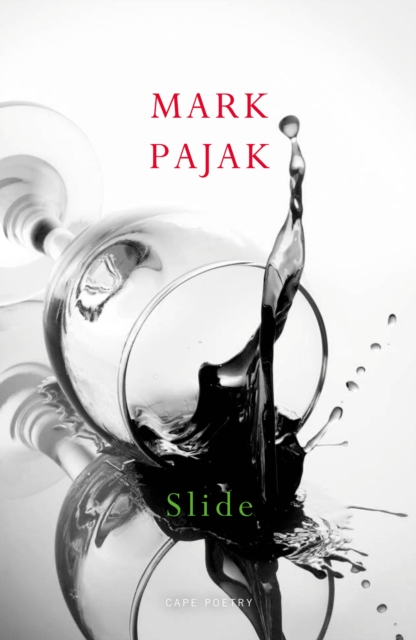
Joseph was chosen as the winner from a shortlist of 10 collections. The others shortlisted included five debut poetry collections: Quiet by Victoria Adukwei Bulley, Slide by Mark Pajak, bandit country by James Conor Patterson, The Room Between Us by Denise Saul and Manorism by Yomi Sode.
Also shortlisted were previous winner Philip Gross for The Thirteenth Angel, Fiona Benson for Ephemeron, Jemma Borg for Wilder and Zaffar Kunial for England’s Green.
The 2021 prize was awarded to Joelle Taylor for her collection C+nto & Othered Poems.
Here's Anthony Joseph reading a poem from the collection
Here's what David Wheatley writing in the Guardian wrote in July 2022 about the collection.
Sonnets for Albert by Anthony Joseph (Bloomsbury, £9.99)
“My father died with his mouth open – / gasping for air”, we read in Shame. After much silence and absence in life, the poet’s father is painstakingly restored in death in a book-length “calypso sonnet” sequence. Albert is a rogue, and encounters with him often take place on the run, as when a brother of the poet catches him at the wheel of a van in traffic in Trinidad. Albert responds by badmouthing his brother to the poet: “they way he does talk proper English, Tony, / he talking more English than you!” Others have respectability, but Albert has style and mystique. Joseph’s relationship with his father is profoundly ambivalent, but Sonnets for Albert movingly makes peace with his shade: Albert has “made his cycle”, an aunt tells the poet, “and that was all that was required of him”.

A long time ago - probably one family Christmas gathering - my sister Debra and me started listing songs we knew that had been covered by another band. We then voted on what we thought was the best recording.
Some time later we invited Nicki - my other sister to join in.
Since then we've taken it in turn posting original songs and a cover of the song to a WhatsApp chat we set up.
We then write a commentary and a judgement about each song.
It's been fun but more importantly it's brought us all a little closer to each other. We all live like - almost everyone else I know - very busy and hectic lives. Our web of connection had become quite thin. Playing wordle almost daily has been fun, but the c2c project has given us an opportunity to go deeper.
Anyway after one commentary and judgement I posted back in October 2022, both my sisters complimented me on the post. So I've decided to post my commentaries to this blog.
I'm not claiming any special gift, talent or skill in writing these commentaries. I'm just listening and commenting on what strikes me about the songs. Sometimes it's the lead voice, sometimes the band, or the lyric or the pace of the song.
I'm gonna post them here cause it's a fun thing to do. It's also a way of celebrating my two wonderful sisters who have supported me through a very rough patch recently. I'm also trying to draw more traffic to the blog - aren't we all - and I want to post more regularly to this blog.
Like the WhatsApp chat with my sisters, I'm gonna post the original and cover song from YouTube, and then write my commentary.
I'm going to attach the first commentary here to this introductory post.
I hope you find them enjoyable. Feel free to comment.
Here's Van Morrison and Them
I love this song. Brilliant to listen to it again. Only really knew the Bowie recording till today.
Lyrically such an interesting, intelligent and insightful
lyric. I love the singer's self conscious, jealous and genuinely human response
to seeing his ex-girlfriend with another boy.
I enjoy and dislike
elements of both recordings.
I love Bowie’s vocal. I always have issues with Morrison’s
voice. But it’s rough and fragile perhaps it really works here.
I don’t like Bowie’s over use of the saxophone. Morrison’s
band is tight as Bowie’s is.
I love the refrain/verse. ‘Here comes the night.’ I love the
way it’s repeated so many times but totally unrelated to the main lyric.
I think the song is so upbeat. Contrasts strongly with the
subject of the song. I don’t enjoy that aspect of the song.
Difficult to judge. The original recording has a default
advantage over the cover, I think. The cover version has to surpass the original, often written by or closely associated with the performer. The cover has to own the song. Make it their own. It has to be more than just a copy of the original.
We have to be aware of the associations we bring to the song and separate ourselves from them.
But here Bowie isn't better than Them despite the better recording equipment and probably better instruments. Bowie isn't trying to do a better performance than the original. He's trying to pay a tribute to them. There's a rawness and an energy to the original, that the cover just doesn't possess. That may have something to do with its release date of 1965, when rock n roll was still quite young. By the time we come to Bowie's1973 cover, the music industry had quietened down, become more settled.
My vote goes to Them.

This year, the shortlist has been chosen by judges Jean Sprackland (Chair), Hannah Lowe and Roger Robinson.
The shortlisted poets are:
Victoria Adukwei Bulley, Quiet (Faber)


Fiona Benson, Ephemeron (Cape Poetry)


Philip Gross, The Thirteenth Angel (Bloodaxe)


Anthony Joseph, Sonnets for Albert (Bloomsbury Poetry)
Mark Pajak, Slide (Cape Poetry)
Denise Saul, The Room Between Us (Pavilion Poetry, Liverpool University Press)
Yomi Ṣode, Manorism (Penguin Poetry)
TS Eliot Prize Shortlist Readings
Sun 15 Jan 2023, 7pm
Royal Festival Hall

I've been completely out of the loop for a few months, battling with cancer and other health conditions triggered by the cancer.
But I'm slowly returning back to life and health. A new shape.
Below is a list of the different poetry prizes and the shortlisted collections, poets and poems.
The Forward Prizes are an unmissable fixture on the literary calendar – a celebration for all who want to discover and ethenjoy the best contemporary poetry.
All of the shortlisted poets are invited to read on the night:
Best Collection – Kaveh Akbar (Pilgrim Bell), Anthony Joseph (Sonnets for Albert), Shane McCrae (Cain Named the Animal), Kim Moore (All the Men I Never Married), Helen Mort (The Illustrated Woman)
The Felix Dennis Prize for Best First Collection – Mohammed El-Kurd (Rifqa), Holly Hopkins (The English Summer), Padraig Regan (Some Integrity), Warsan Shire (Bless the Daughter Raised by a Voice in Her Head), Stephanie Sy-Quia (Amnion)
Best Single Poem – Louisa Campbell, Cecilia Knapp, Nick Laird, Carl Phillips, and Clare Pollard
This year’s judges – Fatima Bhutto, Rishi Dastidar, alice hiller, Nadine Aisha Jassat and Stephen Sexton – read more than 215 poetry collections and 192 nominated single poems to find the most exciting poetry published in the British Isles.
Well I didn't think I was gonna ever be able to hear this interview. But amazingly here it is in the form of an edited video. And so pleased to be able to share it with you.
Enjoy
I'll add videos of Joni's choices of music to this post over the next couple of days.
Sex Kills and interview on The Late Show 1994
from 1959 Chuck Berry playing Johnny B. Goode

Here is a performance of T. S. Eliot's The Four Quartet, performed by Ralf Fiennes
https://www.bbc.co.uk/iplayer/episode/m001d7j0/four-quartets-starring-ralph-fiennes
It's ANZAC Day today. Here's a song by Eric Bogle written to commemorate the day. I've been playing and singing this song for about 50 years.
It's about time I posted it to the blog.
One problem about posting something to my blog - after a long break of not posting anything - to it, is suddenly finding a renewed interest in the blog and finding things to post. This current post is an example of this situation.
About two weeks ago I was talking to my mum about Oumou Sangare. I've been listening to her songs for a long time. Years ago I bought a CD from the World Music Network. It was called Desert Blues. It was a compilation CD introducing the music of West Africa to Europe and the West. It was a great CD. I played it a lot.
Eventually I realised there were two songs - artists that really appealed to me. Their music touched me in ways I can't explain.
The first artist was Oumou Sangare. On the CD she sang Saa Magni.
I haven't been watching many Rick Beato videos on YouTube recently. But scrolling through the suggested feeds today I came across this video posted in late February.
My first thought - after reading the title - was he's gonna talk about John Dowland. And my second thought was he's gonna talk about Julian Bream's rendition of Dowland's lute music.
Click here for a link to the post I made about the album Dances of Dowland by Julian Bream. The album is one of my Desert Island Discs.

Christ Church New Malden
So I was asked to give a sermon titled The Quest for Spirituality. It was one of a series of sermons inspired by the book Broken Signposts by Tom Wright. The sermon series is called, Hope Amid the Broken Signposts. Click here see the other sermons in the series. And click here to listen to the whole sermon series. Anyway, of course I said yes, I'd do it. Whenever I get asked to do anything at Christ Church New Malden - our church - my response is always to say yes.
Somtimes that's been okay. Sometimes that means a lot of trouble. Click here to read what I mean. But that's another story that won't get posted here.
But the sermon was a struggle. It was at times tortuous to prepare. So I've been a bit reluctant to post it.
However I'm reassured by the thought that no one reads this blog. I'm just fulfiling the commitment I've made to myself to post reguarly to the blog, but also to get the sermons out there. They take hours and hours to prepare.
We've been uploading our services to YouTube since we've been back at church after lockdown.
Here's the whole service.
To help you navigate the service you'll find my introduction to the sermon at 14.32 and lasts 10 minutes . The sermon itself starts at 31.40 and lasts 17 minutes.
Not my best sermon. The Holy Spirit eventually took control.
Here's a link to our morning service at Christ Church New Malden given on the 6th June 2021. Katy is the service leader.
The service lasts just under an hour.
Click here for a link to the service. Or copy and paste this url into your browser https://www.youtube.com/watch?v=X0wphSxBq9Q
Or click on the video link just below
If you're at all impatient here are some timings to help you navigate your way through the service.
0.09 Introduction, confession and first song - 10.09 Katy
10.32 sermon taster David
16.50 readings Tim and Lynn
20.35 sermon - 40.41David
41.08 prayers - 48.25 Becky
48.26 final song and close of service - 55.04 Katy
I've also been following WatchMojo lists for quite some time. So it seems appropriate to include this video. It's probably a more popular list. It has way more UK artists and includes or mentions another four of my list.
It's still almost completely dominated by men. Most artists are from the 60s-70s and are all white.
I thought it was worth sharing.
And hope you enjoy it.
Despite....







.jpg)